Under H.R. 1, states with SNAP payment error rates above 6% in FY2026 will face mandatory cost-sharing requirements starting in FY2028. For most states, that means hundreds of millions of dollars in additional program costs per year. It's a direct threat to the access to food that families rely on.
What USDR found after six months of research
USDR spent six months doing pro bono technical assistance with three states (Arizona, North Carolina, and Maryland), completing over 60 qualitative interviews, observing frontline caseworkers in action, and analyzing years of quality control and quality assurance data.
The resulting SNAP Payment Accuracy Playbook, released in March, identifies near-term, low-cost interventions that states can test without new policy or major technology overhauls.
Watch now: Reducing SNAP payment errors: what states can do now
The webinar walked through the top recommendations:
Surface reported changes before they become errors. When clients report income or expenses changes that don't get worked promptly, those cases can sit in a queue with errors already baked in. Prioritizing resources to process these changes or making these changes more visible to frontline staff can reduce errors.
Double-check high-risk cases before final determination. Reviewing cases before they are finalized can catch errors before they happen. States like Arizona have built out a data-driven approach to identify which cases are actually highest-risk and an expert team to review them.
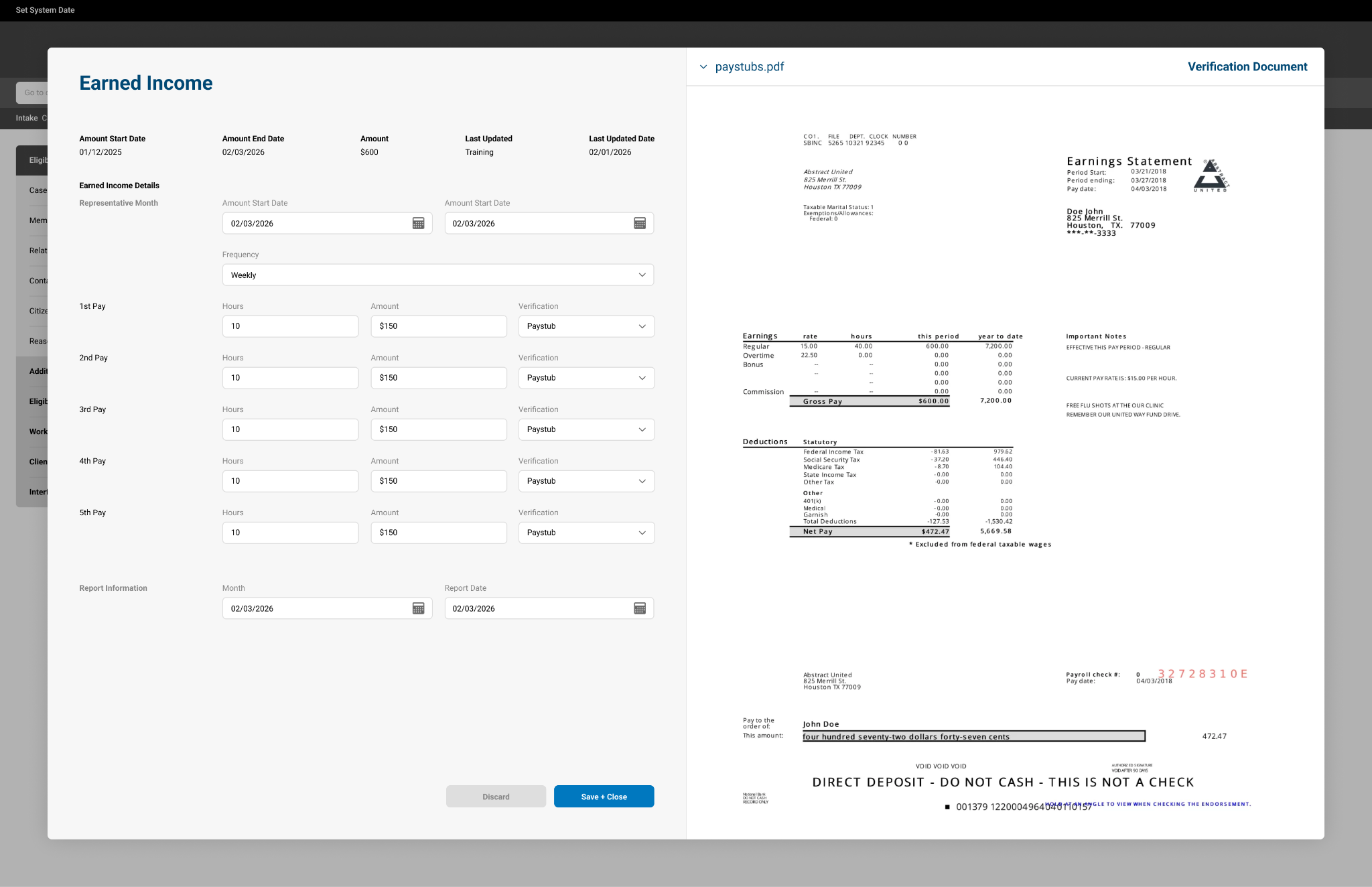
Improve usability of eligibility systems. Rather than full system overhauls, USDR's team focused on targeted fixes. In the design mockup below, earned income data entry and the associated verification document are displayed side by side, a small change that reduces the disconnect between what caseworkers are entering and what they're referencing.
Build feedback loops between QC and frontline staff. Quality control reviewers and eligibility workers often operate in silos by design. The webinar surfaced that federal guidance discourages overlap to prevent bias, but too much separation means errors recur without anyone closing the loop. States that have found ways to share trend data across teams without compromising the independence of QC are seeing results.
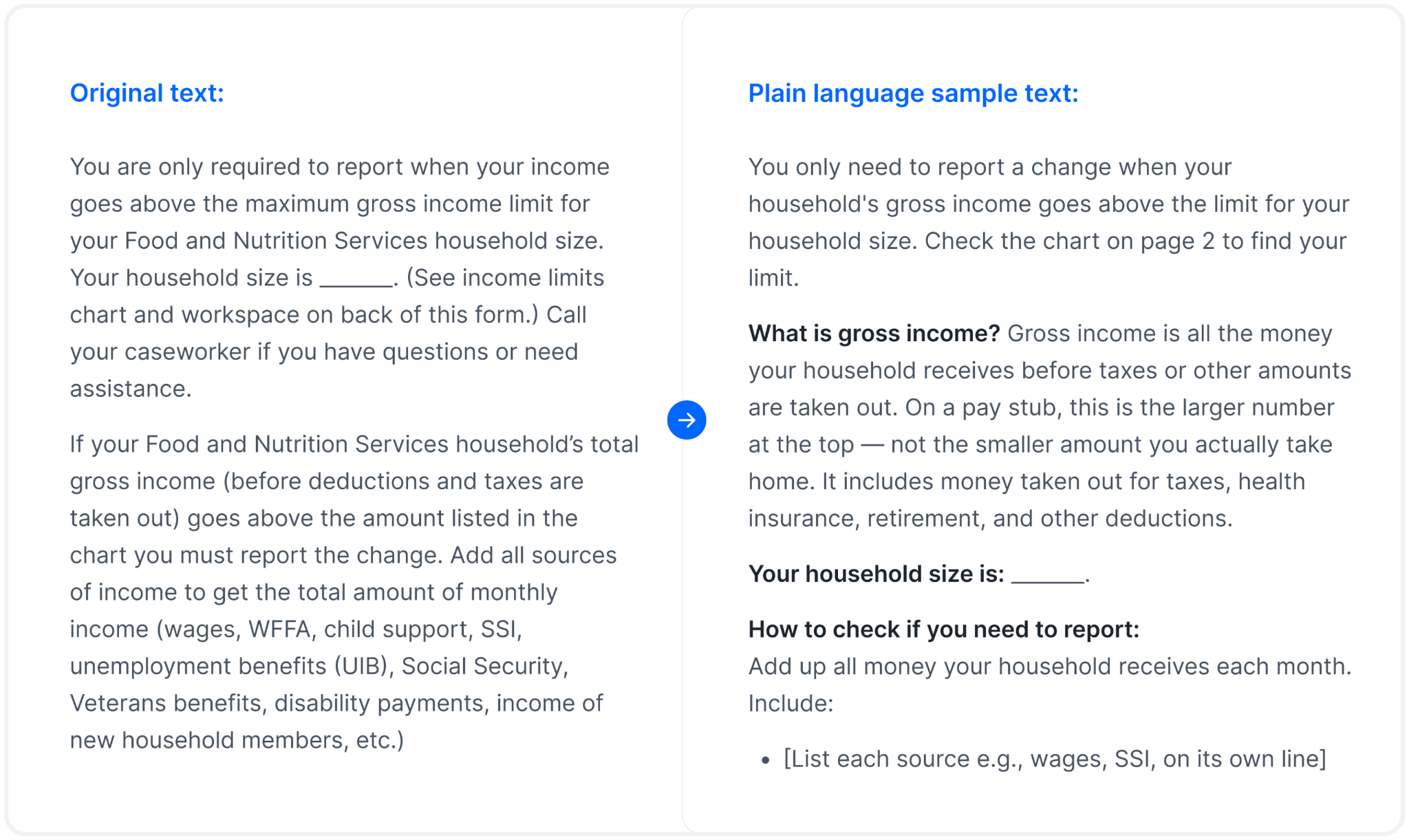
Redesign beneficiary communications in plain language. Requests for additional information notices and change or periodic reporting forms are often written in dense, ambiguous language. USDR shared a before-and-after example showing how a redesigned change report form can make it clear what action a client needs to take.
What state partners said
Jill Simmerman Lawrence, Senior Advisor and Chief of Staff at North Carolina Department of Health and Human Services, walked through what it took to go from knowing there was a problem to actually fixing things. She shared that NC's eligibility system was stacking shelter deductions when caseworkers updated rent amounts rather than replacing the old entry. The fix involved a simple pop-up prompt. Since then, caseworkers have used a one-click option to close outdated deductions over 20,000 times.
She also talked about the challenge of running a county-administered system with 100 county departments of social services. Her team's continuous quality improvement staff, former county workers who now visit each county monthly, have been critical to building the trust needed to drive change without mandating it.
Chloe Green, Assistant Director of Policy at APHSA, acknowledged that the tradeoff between accuracy and access is not new to SNAP, but it has become more challenging now that funding implications are tied to PERs. She shared that certain policy options can help simplify and streamline access for clients and eligibility workers, which can improve timeliness rates, reduce churn, and decrease staff time per case; which can decrease administrative costs as well. However, she acknowledged these moves come with risks of accuracy, and it’s now a more costly risk than ever.
Maria Reyes-Gaskin, USDR's product lead for the project, added that tightening verification to reduce errors can actually create new ones, add caseworker burden, and slow access for eligible families. With the passage of HR 1, she said, the risk equation has shifted but the goal of keeping eligible people in the program hasn't.
One thing people wish they'd known earlier
Reyes-Gaskin closed the panel with a practical note: data sharing agreements with states took anywhere from three weeks to three months to finalize, and the research couldn't start until they were in place. If your state is considering this kind of work, getting the data share agreement started early is a critical step.
Watch the recording and dig into the Playbook
If you're working on payment accuracy in your state, the Playbook has the full set of recommendations, ready-to-use research templates, and the data behind the findings.
- Watch the recording
- Read the SNAP Payment Accuracy Playbook
- Read the SNAP Payment Accuracy Playbook (PDF)
- Read the blog post: How States Can Improve SNAP Payment Accuracy
States have until September 2026 to make meaningful progress. If you're interested in partnering with USDR, please visit our website and learn more about our benefits work.
