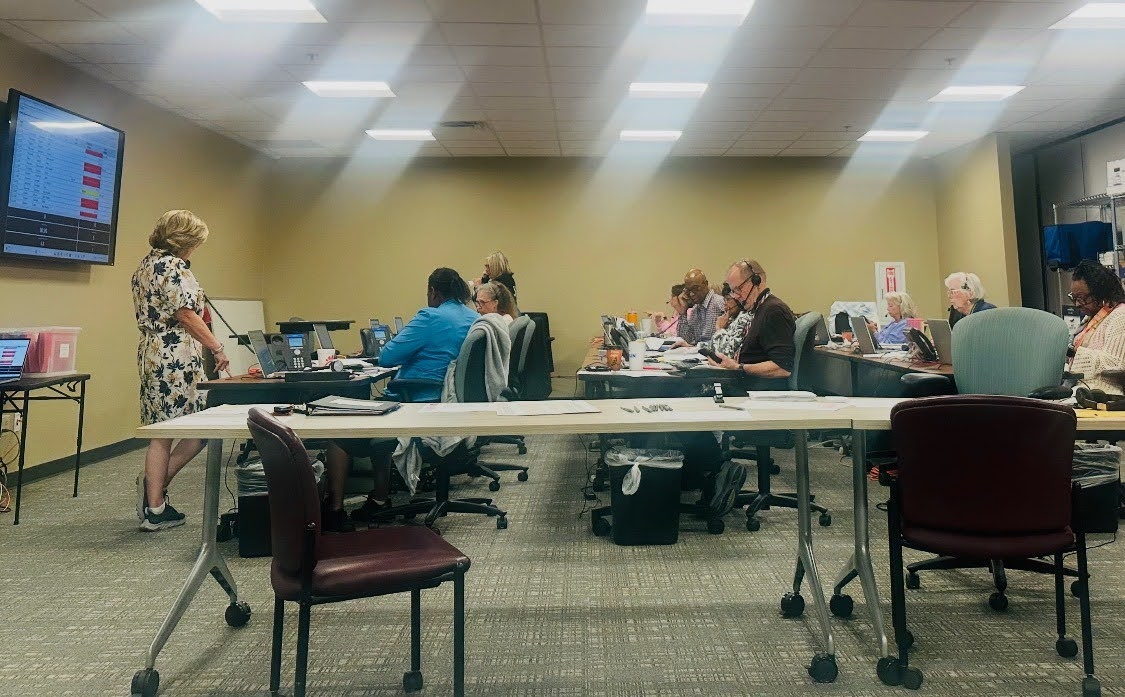
Hi from USDR at the 2026 Code for America Summit
Where to find team USDR at the Code for America Summit
Check out case studies, reports, blogs, and other resources on how creating capacity helps deliver good government.


Where to find team USDR at the Code for America Summit


By Ginger Zielinskie (Center for Civic Futures & Yale SCALE Lab), Sarah Esty (Aspen Institute Financial Security Program), Eric Giannella (Georgetown University Better Government Lab), Anthony Lollo (Yale SCALE Lab), Maria Reyes-Gaskin (U.S. Digital Response)


Mike Foreman was inspired by his grandmother — who was a programmer for the United States Army Corps of Engineers — to choose his career path. After working for decades in leading roles as a VP of engineering with corporations and the government, he retired a few years ago. That’s when he discovered his new career path, his “second mountain,” volunteering with USDR.


A state workforce partner needed to reopen applications for multilingual claimants who were previously denied benefits and determine if they are eligible to receive retroactive PUA payments.


To say that child care affordability is at the forefront of public discussion is to put it mildly. But these days, it’s not just a discussion. In the wake of the COVID-19 pandemic, state and local governments responsible for administering child care benefit programs are seeking to ensure that funds are reaching families in need by updating their services, processes, and technology.


When one county worked to move required paperwork to a digital format, they relieved residents' frustrations as well as reduced administrative burden on their staff.


Within months, the Homeless Services Division, City of St. Louis was able to increase the number of households served and reduce administrative burden through the use of low-code/no-code tools.


Reach the article on the Chronicle of Philanthropy


Read the article on StateScoop
.jpeg)
.jpeg)
Through USDR’s Elections Program, election officials will receive simple, effective digital tools and a surge of assistance to serve voters at the speed of need


Read the article on Stanford Social Innovation Review